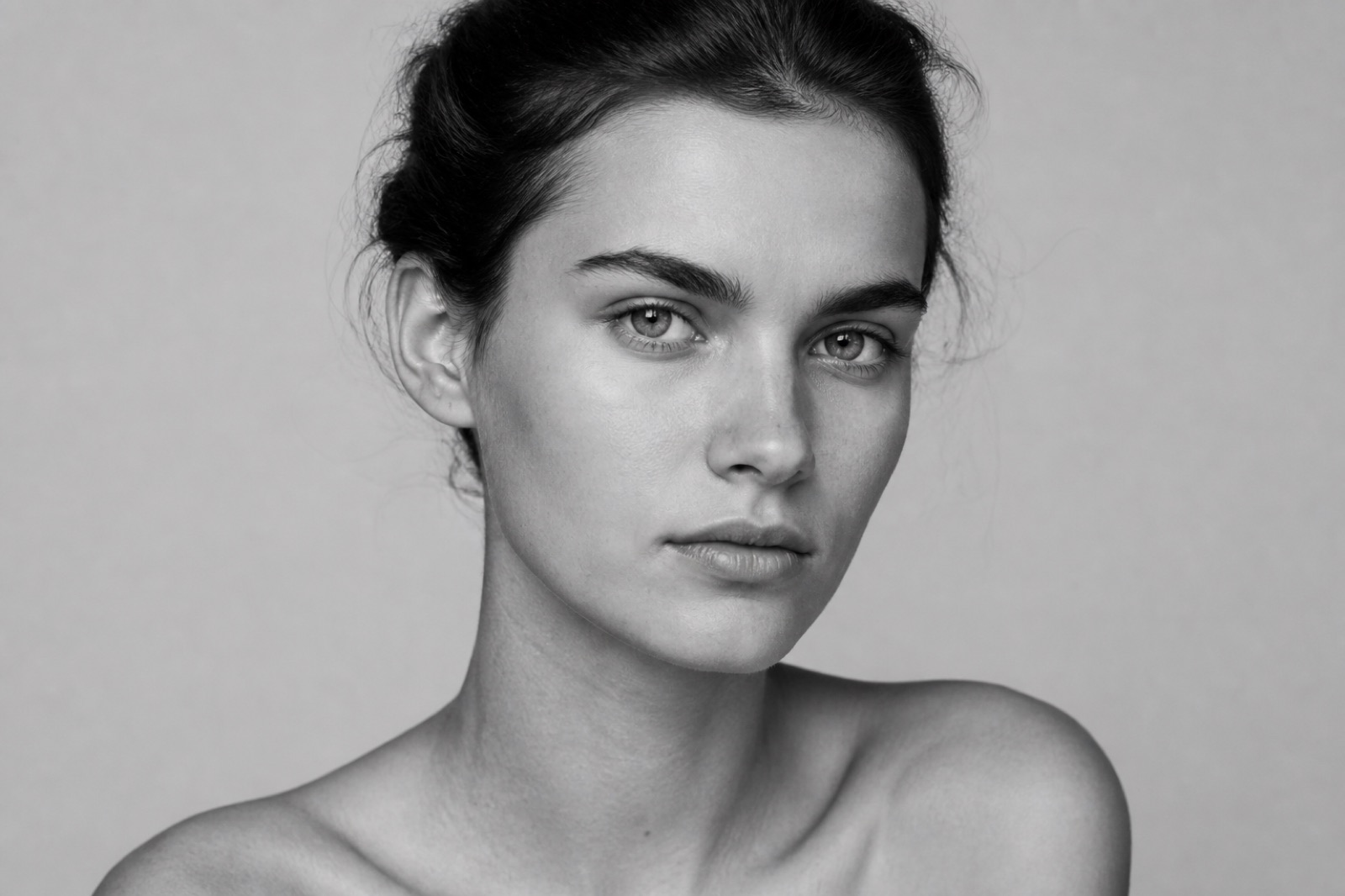
Direct answer
Direct answer: agency submission photos should show what you look like now, without styling tricks. Wear fitted, simple clothing; use even daylight; frame full-length, profile and close-up views; skip filters, heavy makeup, sunglasses and old images; and never send nude, lingerie or unsafe photos to anyone claiming to scout.
Submission photos are not the same as a finished modeling portfolio. A portfolio shows how you can perform in front of a creative team. Submission photos show the starting material: face, proportion, posture, current hair, skin, height impression and comfort in a plain frame. That is why a simple set can be more useful than an expensive shoot when an agency is deciding whether to ask for a meeting.
The current search results around model digitals are full of useful shot lists, but many stop at clothing and poses. The gap for new faces is judgment: when a photo is too styled, when a request is unsafe, when rights matter, and when a good-looking image actually hides the information a booker needs. This guide keeps the focus on clarity, not glamour.
What agency submission photos are for
A submission photo set answers a narrow question: can the agency understand the person quickly enough to decide on a next step? IMG Models tells applicants that natural snapshots in daylight are preferred and professional photos are not necessary for initial review. That public guidance reflects a wider industry truth: the early scan is about current, honest visibility, not production value.
The reviewer is looking for consistency across angles. A face can read one way in a selfie and another way in profile. A full-length image shows proportion, posture and how clothing sits on the body. A smile can matter for commercial boards. A neutral close-up may matter more for fashion. None of those images needs a complex backdrop, because the backdrop is not being cast.
Think of the set as a measurement tool. If it flatters so aggressively that it stops measuring, it becomes less useful. Portrait mode blur, skin smoothing, dramatic shadows and wide-angle distortion all create doubt. A quieter image often gets more serious attention because the reviewer does not have to subtract the effect before seeing the person.
What to wear so the reviewer can see you
Wear fitted basics in solid colors: a simple tank, fitted tee, straight jeans, leggings or clean shorts depending on the agency instructions and your comfort. The clothing should show line and proportion without turning the image into a styling statement. Avoid logos, large prints, distracting straps, heavy layers and anything that changes the apparent shape of your shoulders, waist or legs.
Hair should be controlled enough that the face and neck can be seen. If your hair is part of your look, include one image that shows it naturally and another where it is pulled back or tucked away. Makeup should be minimal or absent unless the agency gives different instructions. The point is not to look unfinished; the point is to let the agency see the features it would actually be representing.
For younger applicants, keep clothing age-appropriate and conservative. IMG's public safety pages say the agency never asks for nude or lingerie photos and does not charge application or signing fees. Treat those as baseline safety expectations across the industry. If a person claiming to scout asks for private images, money, secrecy or pressure, stop the conversation and verify through official channels.
How to frame the set
Use a plain wall, window light and a phone placed far enough away to avoid lens distortion. Eye-level framing is usually better than a high selfie angle. Ask another person to take the photos or use a timer. Keep the camera straight, include the full body where needed, and leave a little space around the head and feet so the image does not feel cropped by accident.
A practical starter set includes a close face image, a waist-up image, full-length front, full-length side or profile, and one natural smile. Some agencies request back view, three-quarter angle, hair up and hair down, or a short video. Follow the agency's current submission form when it is specific. When it is not specific, send enough views to answer obvious questions without flooding the reviewer.
Take the photos in the last few weeks, not last year. Update them after a haircut, color change, braces, visible tattoo, major fitness change or growth spurt. Current images protect everyone. They keep the agency from imagining the wrong version of you and keep you from being asked into rooms where the brief was based on outdated materials.
What to leave out
Leave out mirror selfies, group photos, hats, sunglasses, beauty filters, heavy retouching, old campaign-style images, and anything where the pose is doing so much work that your natural posture disappears. Leave out dramatic editorial shots unless the agency specifically asks for a portfolio supplement. A strong submission set should not require a caption explaining what the reviewer is supposed to notice.
Also leave out inflated claims. If you have not been signed, do not imply representation. If a local photographer liked your images, do not turn that into a professional endorsement. The cleaner your submission language is, the more the photos can do their job. For a more developed book later, our guide to building a scan-friendly modeling portfolio explains how to order polished work after the baseline is clear.
Do not include sensitive documents in a first photo submission unless you are using a verified official process that asks for them. Passport scans, school information, home address and private family details should not sit in a casual email attachment. If you are under eighteen, a parent or legal guardian should be involved before any meeting, video call or document exchange.
Safety, image rights and photographer credit
Submission photos may be simple, but they are still images of you. If someone else took the photos professionally, understand what you are allowed to send and where the images can be used. The U.S. Copyright Office's photographer resources explain that photographers have rights in their work; if a photographer made the images, the safest path is to confirm usage permission before distributing them as submissions.
For phone snapshots taken by a friend or parent, the practical risk is usually lower, but permission still matters. Do not use another person's photo without consent. Do not crop out watermarks to make an image look cleaner. Do not edit a photographer's work in a way that violates their agreement. A serious agency will not expect you to ignore rights just to submit faster.
Safety is more important than any submission. Use official agency websites, verify email domains, and be cautious with direct messages. If a supposed scout asks for secrecy, payment, travel before verification, or revealing images, involve an adult or trusted adviser and contact the agency through its published channel.
How to send the set
Follow the agency form first. If you are sending an email, keep the note short: name, age if relevant, city, height, basic measurements, contact details and why you are writing. Attach or link the requested images in clear file names. Do not send enormous zip files unless requested. Do not use links that require a login or expire before the team can review them.
Use the same discipline if you are contacting a division such as Women or discussing a potential fit for brand casting. The message should make the next action easy: review, request more information, or decline. You cannot control the decision, but you can remove friction from the review.
Finally, wait professionally. Sending the same materials every few days does not improve the photos. If your appearance changes or you have genuinely better current images, update the set and send once according to the agency's stated process.
FAQ
Do submission photos need to be professional?
No. Many agencies prefer natural snapshots for first review because they show current appearance without styling or retouching.
Can I wear makeup?
Keep it minimal unless the agency asks otherwise. The reviewer needs to see skin, features and structure clearly.
How many photos should I send?
Send the number requested by the agency. If no number is given, five to seven clear views is usually enough for an initial scan.
Good submission photos are quiet, recent and safe. They do not try to win the whole career in one image. They make a serious first review possible.
Sources consulted: IMG Models applicant FAQ, IMG Models Get Scouted safety guidance and the U.S. Copyright Office photographer resources. Featured image: existing Barnett Ellman site asset, /assets/img/photo-hero.jpg.