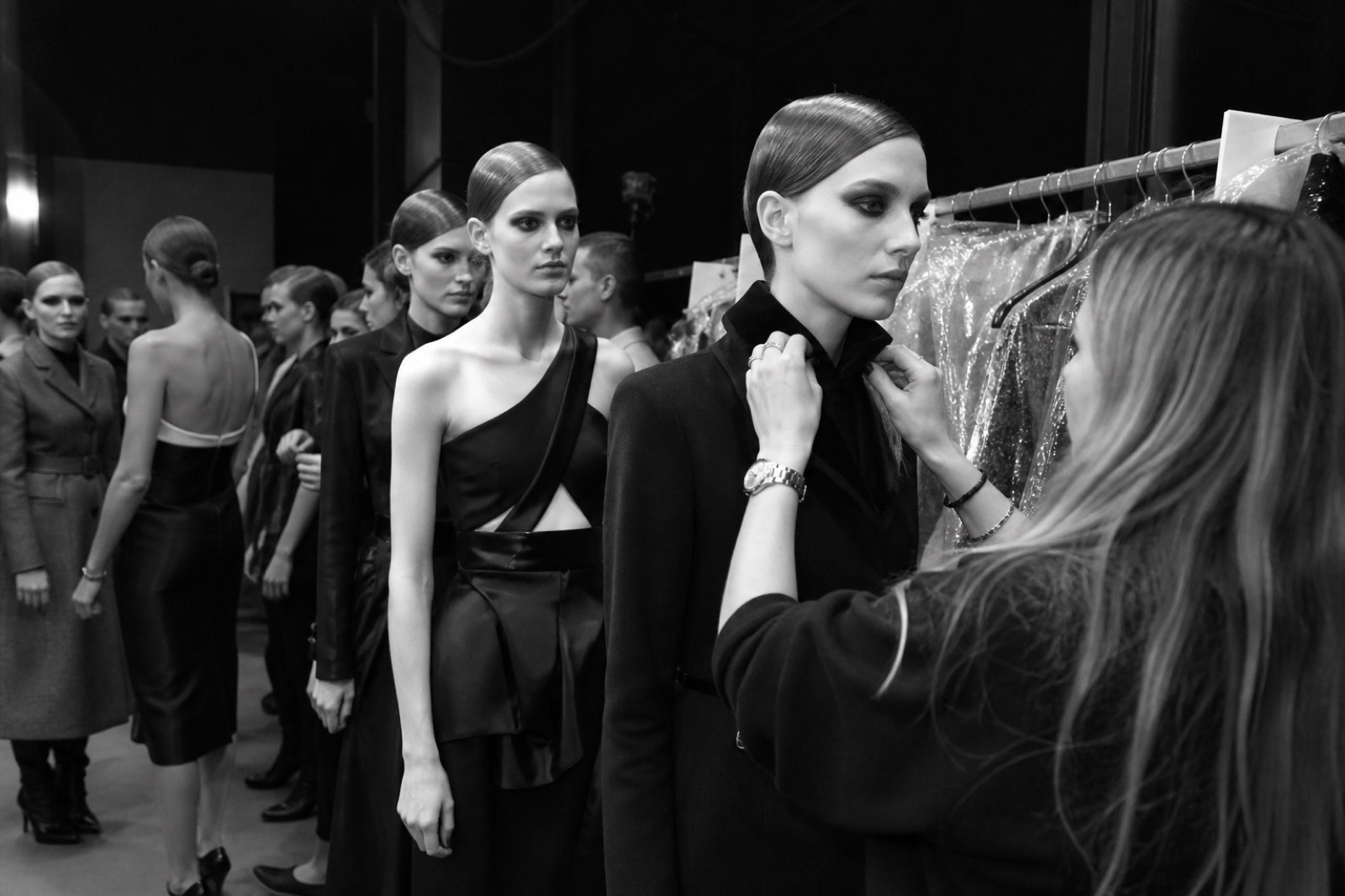
Our Brand Casting desk sees the same question from both sides of the table: what makes a face useful now? The answer is less about novelty than trust. Brands want talent who can move across video, stills, social, live events and longer usage windows without creating rights confusion. Models want clearer briefs, safer working conditions and contracts that do not quietly turn one shoot into unlimited digital reuse.
Halfway through 2026, five patterns are shaping the work. Treat these as editorial observations, not promises of bookings or a substitute for legal advice on usage rights.
The Self-Tape Standard
The pandemic-era self-tape was a workaround; the 2026 self-tape is infrastructure. Many first rounds now begin with a short video before anyone enters a casting room: a clean walk, a turn, a short piece to camera, natural light, no filters and no heavy edit. For clients, video lets creative teams compare movement and presence before scheduling a room. For models, the implication is blunt: the self-tape is now a core professional skill, as fundamental as the walk itself.
That does not make the final decision automatic. Significant campaigns still close through human judgement: chemistry with a photographer, how talent handles direction, and whether everyone understands the usage, fee and exclusivity before the shoot moves forward.
What has not changed is the final round. Significant campaigns still close in person, because chemistry with a photographer and how a face holds a room remain stubbornly untransmittable. The funnel is digital; the decision is human.
Street Casting Grows Up
Street casting used to be a stylistic statement — a way for a brand to signal rawness. In 2026 it is simply a lane, with professional norms hardening around it. The briefs have gotten specific: not "real people" but "a retired dancer in her sixties", "actual mechanics with their own workshop", "teenagers who skate, not models who hold skateboards". Brands have learned that audiences can detect a cast model playing a civilian at a hundred paces, and the penalty for faking it — in comment sections and in sales — is real.
The professionalization matters more than the aesthetics. Putting a first-timer on a set involves releases, minors' permissions, payment logistics and a genuine duty of care, and the brands doing street casting well now budget for all of it. It is why our casting desk runs street projects with the same scouts who feed our development board: finding the face is a third of the job; protecting the person attached to it is the rest.
Longevity Over Virality
The most consequential shift in the briefs themselves is temporal. Three years ago, clients asked for faces that could spike a launch week. Now the phrase we read constantly is some variant of "a face we can build on" — brands want two-year ambassador arcs, renewal options and talent whose public presence is stable enough to survive a news cycle. The influencer-casting fever has broken, not because follower counts stopped mattering, but because procurement departments started calculating cost per durable impression instead of cost per impression. A face that quietly carries a brand for three years now beats a face that trends for three days, and the contracts reflect it: longer terms, broader usage, meaningful exclusivity money.
Brands stopped asking "who is everywhere right now?" and started asking "who will still make sense next to our logo in 2029?"
For models, this rewards exactly the unglamorous virtues we push in development: reliability, professionalism and a public presence that will not embarrass a legal department. Boring, as one of our agents likes to say, is the new bankable.
The Supermodel Strategy Returns
Here is the reversal. After a decade of campaigns fronted by rotating casts of relatively anonymous faces, the named face is back. Luxury houses in particular are consolidating budgets behind fewer, bigger talents — models whose names appear in the press release, whose presence is the story. It is a return of the 1990s supermodel logic, updated for an attention economy in which recognition is the scarcest asset a brand can rent. The knock-on effect runs through the whole market: mid-tier campaigns are upgrading their lead face and economizing on the supporting cast, which means the gap between a board's top and middle is widening. For agencies, developing a face that can carry a name has never been more valuable; for brands, locking one in early — before the name exists — has never been better business. That, not coincidentally, is what a good new faces program is for.
The Authenticity Audit
The newest item on client checklists did not exist in many briefs two years ago: verification that a face is real and that usage rights are clear. AI-generated imagery has made "human, verifiable, insurable" an explicit requirement for campaigns built around trust: beauty, healthcare, finance, education, anything with a testimonial structure. We now treat provenance documentation and likeness-rights language as part of the casting conversation, not legal paperwork to sort out later.
Some brands are experimenting with synthetic models for volume e-commerce and concept work. At the same time, the regulatory and worker-rights conversation has sharpened. The New York Fashion Workers Act, in effect since June 2025, created new protections for models, including clearer agency obligations. The Model Alliance's AI work also highlights why written consent for digital replicas is no longer optional etiquette; it is a material risk issue.
Sources and limits
This article was checked on September 21, 2026 against current public discussion of fashion AI, worker rights and casting practice, including the Model Alliance AI resource, its Fashion Workers Act explainer and recent fashion coverage of AI-assisted shows. It does not claim specific B|E booking rates, campaign outcomes or client data.
FAQ
Should a model allow a body scan or digital replica?
Only after reviewing written terms that explain the use, term, territory, compensation, deletion rights and whether the replica can train or generate future work. Minors need extra care and guardian review.
What should a brand put in a casting brief?
State the role, deliverables, shoot location, usage channels, term, exclusivity, AI or digital-replica expectations, payment timing and any real-person requirements before asking talent to submit.
What It Means for Models and Brands
Pulling the threads together: the industry is bifurcating into a high-volume digital layer where efficiency rules, and a premium human layer where recognition, longevity and authenticity command growing premiums. For new talent, the strategy is clear — master the self-tape, build the boring virtues, and aim your development at the premium layer, because that is where careers compound. For brands, the winning move is equally clear: choose fewer faces, choose them earlier, contract them longer and paper the AI clauses properly. If you want help with either side of that equation, our casting desk and scouting team answer the same phone number. Some things at B|E have not changed since 2007.