Direct answer
Direct answer: AI video generators are useful in fashion preproduction for internal storyboards, shot order, camera ideas, transitions, pacing and stakeholder alignment. They cannot truthfully replace a model's self-tape, current digitals, fitting, movement test, consented performance or final product proof.
The most productive place for generated video is before the camera rolls, when the team is still asking questions. Should the opening be a close detail or full silhouette? Does a transition need a turn, a walk or a fabric movement? Which shots require a location, rig, stylist or specialist? A rough moving reference can expose those choices faster than paragraphs.
The dangerous place is where previsualization starts masquerading as evidence. A synthetic person cannot prove how a booked model will move. A generated garment cannot prove real fit. A cloned face cannot quietly extend a one-day booking into unlimited future content. In fashion casting, clarity about what is real is part of professional practice.
Five useful preproduction jobs
1. Turning a moodboard into shot order
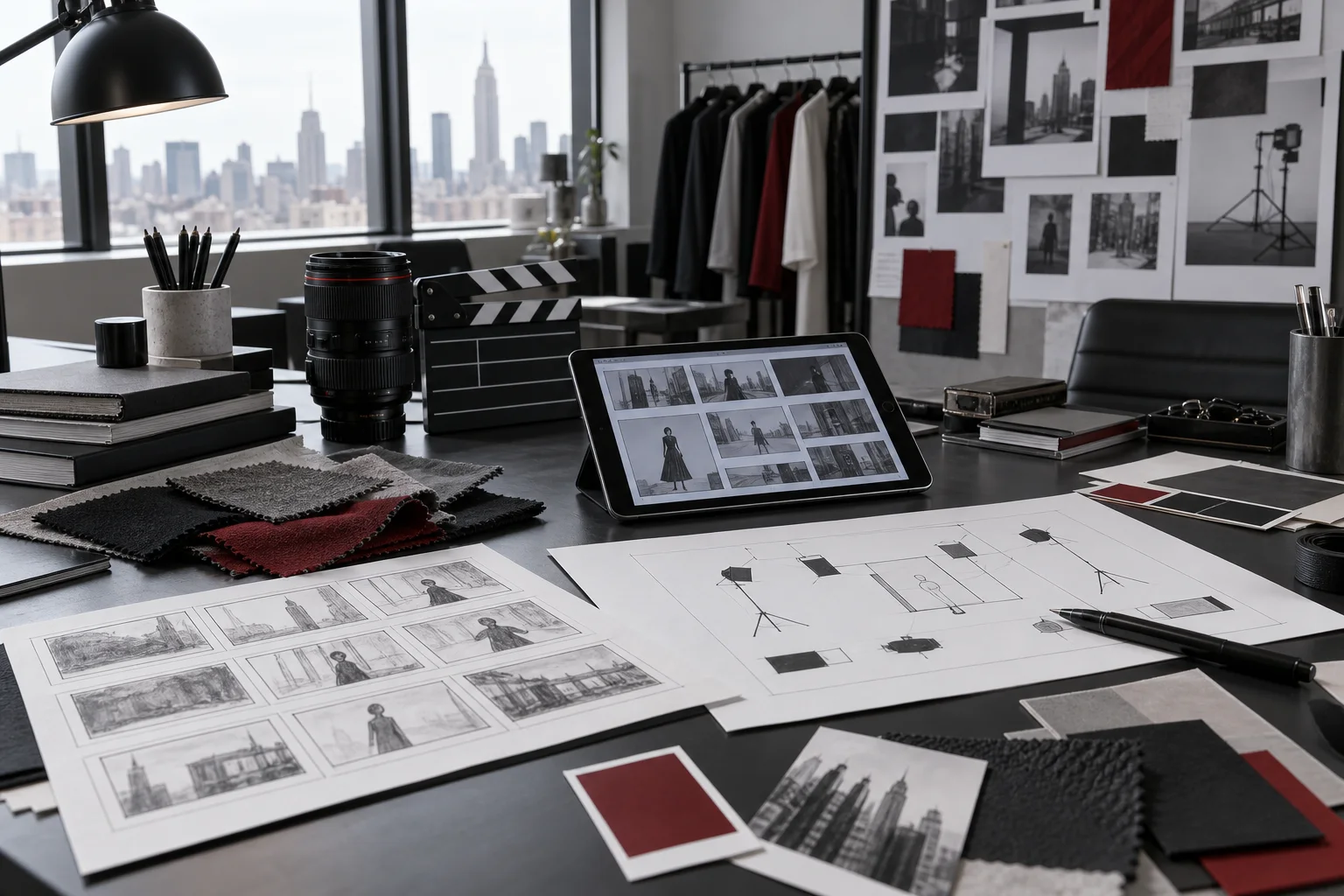
A static moodboard can communicate color and attitude but not sequence. Image-to-video tools can help an art director sketch an opening, transition and closing frame. The result is an animatic, not a finished ad. Its value is that production can react: photography sees lens questions, styling sees continuity, and casting sees the movement the brief may require.
2. Testing camera language
Teams can compare a restrained locked-off frame with a tracking move, push-in or fast handheld idea before committing equipment. Generated motion may be physically impossible, but that can still reveal intent. The director should translate the reference into achievable camera instructions rather than asking crew and talent to copy an AI artifact literally.
3. Planning transitions and social cuts
Short fashion content often depends on transitions: garment change, match cut, whip pan, turn or step toward camera. Previsualization can show where those beats occur and which clean plates or repeated poses are needed. It is particularly useful when a hero film must also yield six- and fifteen-second edits.
4. Revealing production questions
A synthetic test can uncover the need for a wind machine, controlled fabric movement, a duplicate garment, extra fitting time or more coverage. That is a success even if none of the generated frames survive. Preproduction is about identifying unknowns while changes are still cheap.
5. Aligning client and crew
Words like “effortless,” “cinematic” and “raw” mean different things to different people. A rough clip makes disagreement visible. The team can annotate what it likes—pace, framing, palette—and what it rejects. A brand casting brief then becomes more specific about presence and movement without pretending the synthetic performer is the casting target.
What AI video cannot replace
It cannot replace current casting materials. Digitals and self-tapes exist to show a real person now: appearance, voice, timing, movement, proportions and ability to follow a brief. Submitting a generated version would remove the evidence the casting team needs. Our guides to agency submission photos and a scannable modeling portfolio emphasize current, readable materials for exactly this reason.
It cannot replace a fitting. Fabric weight, transparency, stretch, hem behavior and the relationship between garment and body are physical. Generated video may produce beautiful drape by changing construction. That is concept art, not fit evidence.
It cannot replace directed performance. A model contributes interpretation, timing and response. A real set also introduces garment, surface, lens, light and human collaboration. Synthetic motion can propose a beat, but it cannot demonstrate the booked person's actual performance.
It cannot create consent retroactively. A brand does not acquire the right to generate new performances from a model's likeness simply because it licensed photographs or footage for one campaign. Digital-replica use requires explicit terms and informed agreement.
Casting, likeness and disclosure boundaries
The U.S. Copyright Office's digital replicas report describes the growing ability to create realistic digital representations and recommends protections against unauthorized replicas. The exact legal analysis varies by jurisdiction and contract. The practical production rule is simpler: if a real person is identifiable, obtain specific permission before using their likeness as AI input or output.
A useful consent addendum should be reviewed by counsel and address which source assets may be used, what may be generated, approved media and territories, duration, training or fine-tuning restrictions, approval rights, storage, deletion, compensation and whether the person may revoke future use. A broad “all media” phrase in an old release should not be treated casually as permission for a synthetic double.
Minors require even greater care. A parent or guardian must be involved, private material should not enter experimental tools without a verified policy and legitimate reason, and synthetic content should never blur the line between the child's real performance and an invented one.
Disclosure also matters. In the European Union, Article 50 transparency obligations under the AI Act began applying on August 2, 2026; the European Commission has published guidelines on transparency obligations. Requirements depend on the system and context, so campaigns should receive legal review rather than relying on a universal caption. Internally, every generated asset should be labeled even when it never reaches the public.
A safer previsualization workflow
- Write the production question. “Can this transition connect two looks?” is better than “make a fashion video.”
- Use cleared inputs. Start with commissioned, owned or properly licensed references. Avoid uploading model imagery unless the permitted AI use is explicit.
- Prefer non-identifiable placeholders early. Silhouettes, mannequins, sketches and abstract frames can communicate blocking without inventing a real person's endorsement.
- Label every output. Mark it “AI previsualization—not casting or product evidence,” with date, tool, model and source references.
- Extract instructions. Convert the clip into a shot list, movement notes, props, timing and production needs.
- Replace synthetic assumptions. Once talent and products are booked, revise the plan around real fitting, ability, safety and consent.
- Archive selectively. Keep approved planning records and remove unnecessary likeness inputs according to policy and contract.
Current AI fashion-video research also underscores the technical challenge. Work such as Fashion-VDM focuses on temporal consistency and human motion because maintaining identity, garment detail and plausible movement across frames is difficult. A tool may produce one striking frame while seams, fingers or prints drift a second later.
The frame-by-frame review checklist
Review face and identity, hands, limbs, gait, garment construction, logo and text, fabric pattern, reflections, shadows, background continuity and physical feasibility. Then review the nonvisual layer: source rights, consent, intended audience, disclosure, metadata, music and voice permissions.
Keep the approval roles separate. Creative can judge whether the idea communicates. Production can judge whether it is achievable. Casting can judge whether the movement note is fair and relevant. Legal can assess likeness, disclosure and use. The person represented—or their authorized representative—must have the approval promised by contract.
If a generated preview makes a real model appear to perform something unsafe, impossible or outside the agreed brief, change the concept. Previsualization should reduce ambiguity, not pressure talent to reproduce a machine's mistake.
FAQ
Can AI video replace a model's self-tape?
No. It does not show how that person actually looks, moves, speaks or follows direction and should not be submitted as casting evidence.
What is the safest use in fashion production?
Internal previsualization: testing shot order, pacing, transitions, framing and production questions before working with consented talent.
Can a brand clone a model's likeness after a shoot?
Not without explicit, informed permission covering the digital-replica uses, duration, media and compensation. Contract and legal review are essential.
Sources consulted: U.S. Copyright Office Digital Replicas Report, European Commission AI transparency guidelines, and the Fashion-VDM research paper. This is production guidance, not legal advice. Featured image created for this article with an AI image generator and reviewed to avoid identifiable people.