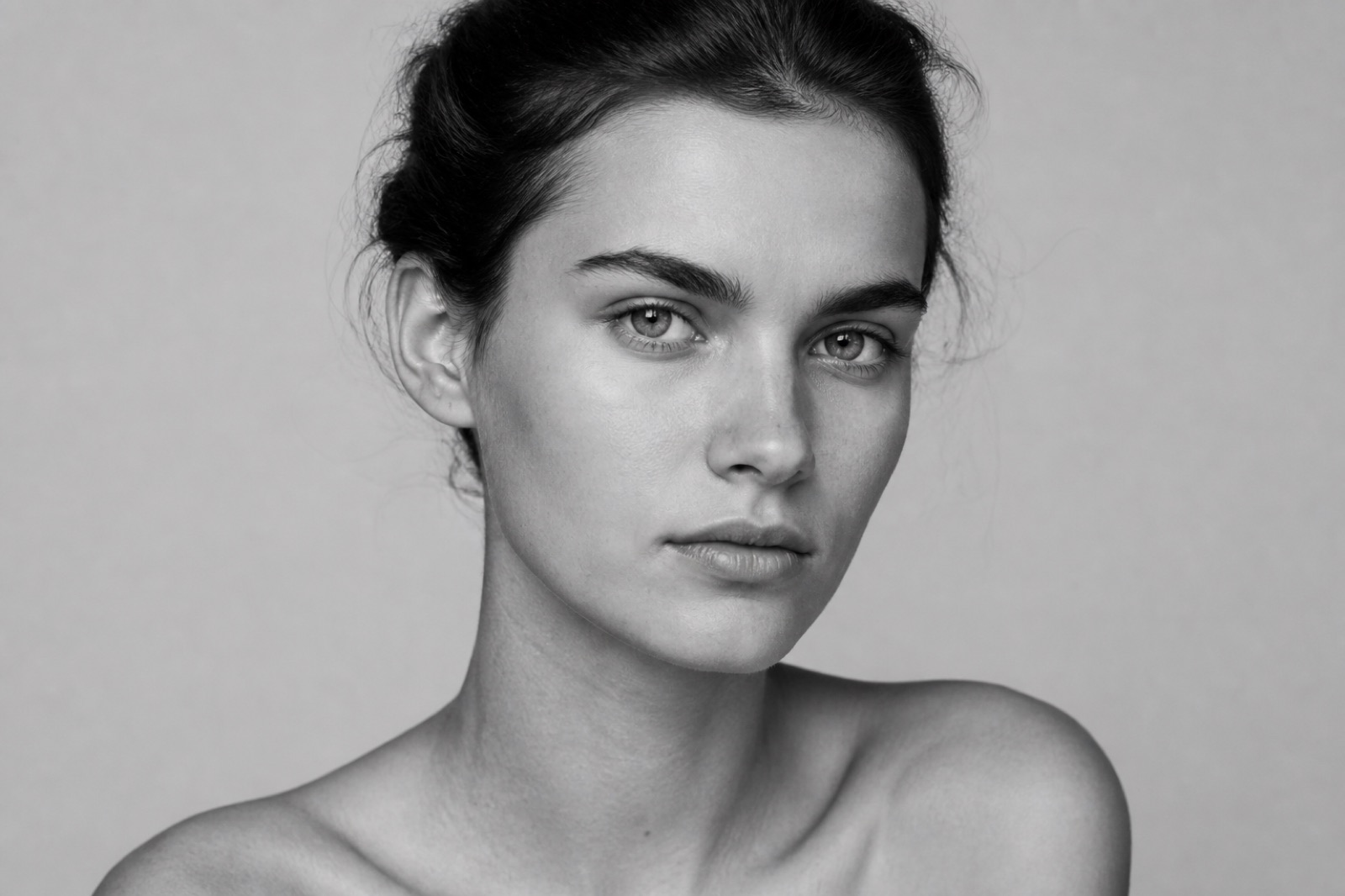
Every week, hundreds of people ask us some version of the same question: how do I get noticed by a model agency? The honest answer is less mysterious and less glamorous than the industry's mythology suggests. Scouting is a discipline with patterns, preferences and a surprising amount of paperwork, and once you understand how it works from the inside, your odds of a serious response go up dramatically. This guide is written by the people who read the submissions at Barnett Ellman — the same team that has fed our New Faces division since it was formalized in 2017.
Where Scouts Actually Look
The romantic story — discovered at a shopping mall, plucked from a crowd — still happens, but it is a shrinking slice of the pipeline. Our scouts work four channels in roughly equal measure. First, the street: fashion weeks, concerts, sports events, university campuses, anywhere young people gather in volume. Second, digital submissions through agency websites, which have quietly become the single largest source of signed talent at B|E over the past five years. Third, social media, though not in the way most people assume — we rarely scout from polished influencer accounts; we scout from tagged photos, team pages and the unguarded pictures friends post of each other. Fourth, referrals from photographers, stylists, teachers and current models who know what we look for.
The practical takeaway: you do not need to be seen at the right party. A direct submission to an agency's official channel is not a lesser route — it is the main route now, and it puts your photos in front of a scout within days rather than leaving discovery to chance.
What We See in Ten Seconds
A scout's first pass on a submission takes about ten seconds, and it is worth knowing what those seconds are spent on. We look at bone structure before anything else — the geometry of cheekbones, jaw and brow that photographs consistently from multiple angles. We look at proportion: the relationship between shoulders, torso and legs matters more than any single measurement. We look at skin and hair only insofar as they suggest how you photograph today, not how you might with work. And we look for something harder to name, usually described in our notes as "presence" — the sense that a camera would have questions for this face.
What we are explicitly not doing in those ten seconds: judging your styling, your photography skills, or your follower count. A blurry gym mirror selfie has signed models at this agency. A professionally retouched portfolio has sunk applicants, because retouching hides exactly the information we need.
Requirements and Myths
Height guidelines exist and pretending otherwise would be dishonest: for high-fashion runway work, women typically measure between 5'9" and 6'0" and men between 6'0" and 6'3". But those are guidelines for one lane of the industry, not the industry. Commercial, beauty, fitness and e-commerce work — the segments where most working models earn most of their income — are far more flexible, and the rise of street casting for campaigns has widened the door further. We have profitable, busy faces on our board who would fail the runway height check by three inches.
Age is similarly misunderstood. The development window for high fashion typically opens around 15 or 16 (with guardians involved at every step), but commercial careers regularly begin in the twenties, and the classic and gray-market categories are among the fastest growing in the business. The myth that modeling ends at 25 is roughly a decade out of date.
Send us what you look like on an ordinary Tuesday. That is the person we can build a career for.
The Perfect Submission
Here is exactly what a scout wants to receive, and it costs nothing to produce. Four photos, shot on a phone by a friend, in daylight, against a plain wall: one face-on portrait with no makeup and hair pulled back, one profile, one full-length in simple fitted clothing, and one smiling. No filters, no editing, no sunglasses, no hats. Alongside the photos: your height, your city, your age, and two or three honest sentences about yourself. That is the entire package.
- Do: stand near a window or outside in open shade; keep the background empty; wear fitted, plain clothing.
- Do: include your real measurements if you know them — and say so if you do not, rather than guessing.
- Don't: pay for a "scouting portfolio". Agencies do not want it and scammers know you might.
- Don't: submit the same message to thirty agencies with no name attached. We can tell, and it reads as noise.
At Barnett Ellman, submissions go through the contact page — choose "I want to become a model" and the message routes directly to the scouting desk. Every submission is reviewed by a person, and genuine potential gets a reply within two weeks.
Red Flags and Scams
The modeling industry has a parasite economy, and new faces are its target market. The rules that protect you are short. A legitimate agency never charges you to apply, to be scouted, to join the board or to attend development classes — real agencies invest in talent and earn commission from bookings, which means their incentives are aligned with yours. Be suspicious of anyone who "scouts" you and then routes you toward a paid photoshoot with their preferred photographer; that is a sales funnel, not a scouting operation. Verify that the person contacting you appears on the agency's official website or emails from its official domain. And no legitimate scout will ever ask a minor to communicate without a guardian involved.
If any of those lines are crossed, walk away. There is no opportunity on the other side of a fee.
What Happens After a Yes
Suppose the answer is yes — a scout sees potential and invites you in. What follows at B|E is deliberately unhurried. You (and your guardians, if you are under eighteen) meet the team, we take simple digitals, and we talk honestly about what market exists for your look and what a realistic first eighteen months involves. If both sides want to proceed, you enter the New Faces development program: coaching, curated test shoots and portfolio building, all at the agency's expense. Only when your book and confidence are ready do you meet clients, starting small and scaling with feedback. For a detailed picture of what that first job feels like, read our companion guide to surviving your first photoshoot.
Getting scouted is not about being in the right place at the right time anymore. It is about putting honest information in front of the right desk. Ours is open.
Scouting safety checks for 2026
Direct answer: the most controllable way to get scouted is to send recent, unretouched digitals through an agency's official submission route, keep your public profile easy to verify, and reject any opportunity that starts with an upfront fee. Current editorial results from Get Scouted, GetModel and ModelGlance all emphasise the same pattern: scouts want clear photos, honest measurements, location, basic availability and reachable contact details, not a paid portfolio.
The safety layer matters just as much as the photos. The FTC's modeling-scam guidance warns that real agencies are paid when talent is paid, while scams often push advance fees, guaranteed work, mandatory photographers or rushed contracts. For minors, a guardian should be copied into every conversation from the first contact.
Quick answers
- Do I need professional photos before applying?
- No. Most agency applications start with clear phone digitals: face, profile and full body in natural light.
- Should I pay to be discovered?
- No. Treat upfront discovery, representation or mandatory shoot fees as a red flag and verify the company first.
- What if I do not meet runway height guidelines?
- Runway is only one market. Commercial, lifestyle, beauty, fitness and mature categories use broader casting needs.